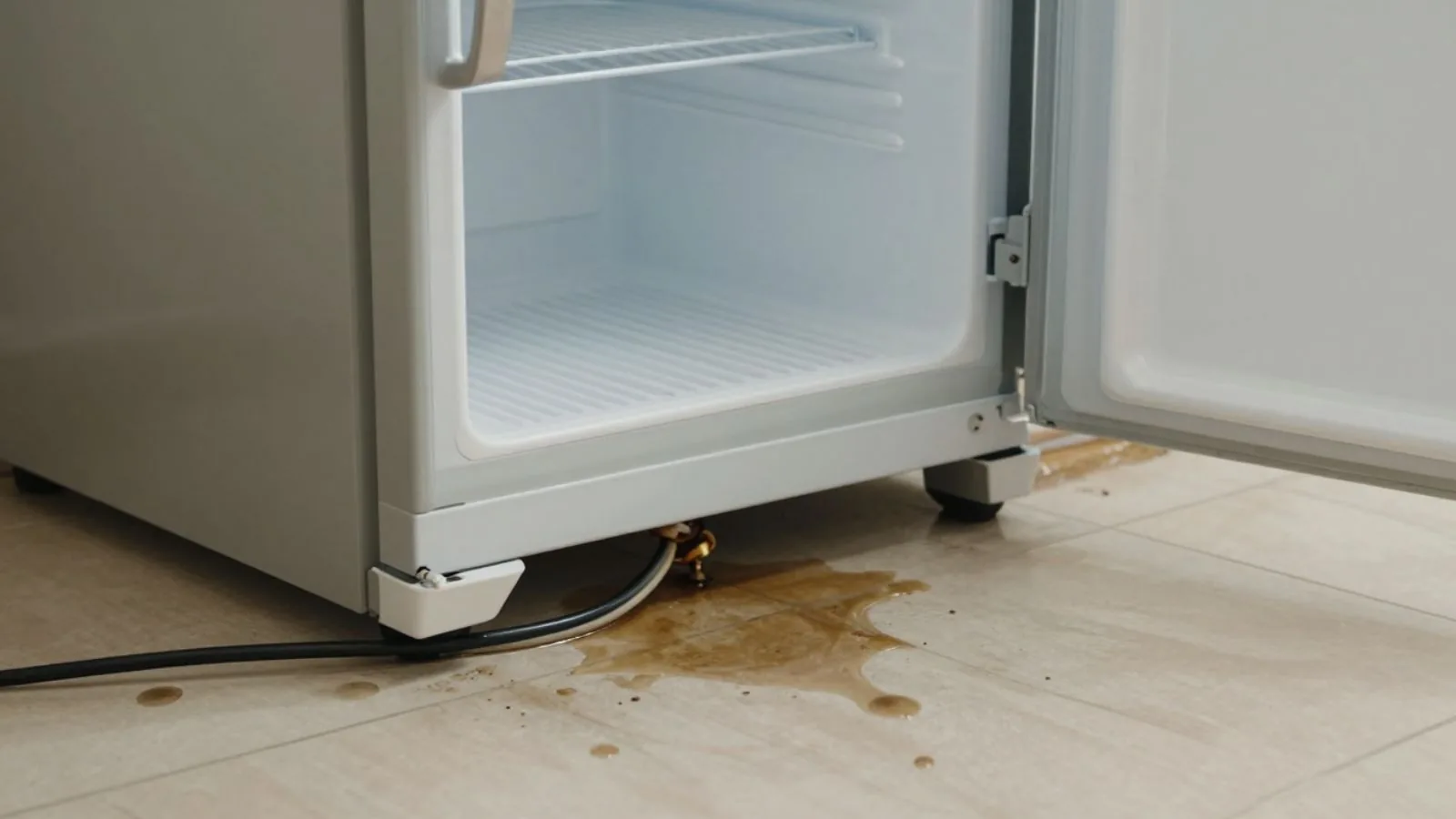
An appliance that is leaking is an emergency when the water has reached the floor. Unplug it only if the outlet is dry, close the valve behind or beneath it, and call (833) 521-1033. The line is answered 24/7, so a washer hose that lets go at night gets the same attention as one that fails at noon.
Appliance leak water damage comes from a failed supply hose, a clogged drain line, a cracked tub or a worn door seal. The appliances most often involved are washing machines, dishwashers, refrigerator ice makers and utility sinks. The job is cleanup and drying, not appliance repair.
Where the water comes from
| Appliance | Common failure | What the water does |
|---|---|---|
| Washing machine | Burst supply hose or overflow | Fast flooding, can reach floors below |
| Dishwasher | Door seal, drain hose, or inlet valve | Slow leak under cabinets and flooring |
| Refrigerator | Ice maker line or drain pan | Hidden leak behind or under the unit |
| Utility sink and drains | Clogged or loose connection | Seepage along cabinets and walls |
A washing machine hose under pressure can release large amounts of water in a short time. A dishwasher or ice maker line may drip for weeks before a soft floor or musty smell gives it away. Which kind of leak you have changes how far the water traveled.
What to do in the first minutes
Close the valve
Turn off the shutoff behind the appliance or use the main valve.
Unplug if dry
Disconnect only when the outlet and floor are dry, otherwise leave it and call.
Pull the unit out
If it is safe, slide the appliance forward to look at the wall and floor behind it.
Take photos
Photograph the hose, the wet floor and anything damaged, before cleanup starts.
Cleanup and drying
Technicians extract the water, then use moisture meters to trace it under cabinets, along baseboards and under flooring. Kitchen and laundry floors often have layers, such as vinyl over underlayment over subfloor, that hold water longer than the surface suggests.
The cleanup affects whatever the appliance sits against. For cabinet toe kicks and sink bases, see the kitchen water damage page, and for wet carpet or pad near a laundry area, see carpet water damage restoration.
Insurance and documentation
A sudden hose or valve failure is often covered by a homeowners policy, while slow leaks over time often are not. Read your policy or ask your insurer, and keep the failed hose or part. The Connecticut Insurance Department says claims should be reported as soon as possible.
Preventing the next appliance leak
Washing machine hoses are the most common failure, and rubber hoses age quickly. Braided steel hoses last longer. Check connections for bulges, rust or drips. Turn the supply valves off when you leave for a long trip. A small tray with a sensor under the machine or dishwasher gives an early warning.
Professional drying and documentation follow ANSI/IICRC S500, the standard for water damage restoration.
Crews serve Avon and the nearby towns of Unionville, Canton, Burlington and North Canton. For a laundry room leak on the south side, the page for Unionville explains the service path.
What shapes appliance leak cleanup cost
The visible puddle is only part of the picture. The path of the water decides most of the cost.
- How long the leak ran before it was found
- Flooring layers and what they hold
- Cabinets, baseboards and drywall that need removal
- Whether the water reached rooms or floors below
- Drying days and rebuild scope
Call with the appliance type and where the water went.
Call (833) 521-1033Questions about appliance leak water damage
Do you handle appliance leak emergencies at night or on weekends in Avon?
Yes. The line is answered 24/7. Close the valve behind the appliance and call.
Can a slow dishwasher leak cause serious damage?
Yes. Weeks of seepage can soften subflooring and cabinet bases without any visible puddle. Moisture mapping shows the extent.
Do you repair the appliance?
No. An appliance technician or plumber handles the repair. Restoration removes the water and dries the structure.
Should I move the appliance myself?
Only if it is safe to do so. Heavy appliances can tip, and the floor may be slick or weak.
What should I keep for the claim?
Photos of the leak and the damaged areas, plus the failed hose or part until the adjuster reviews it.