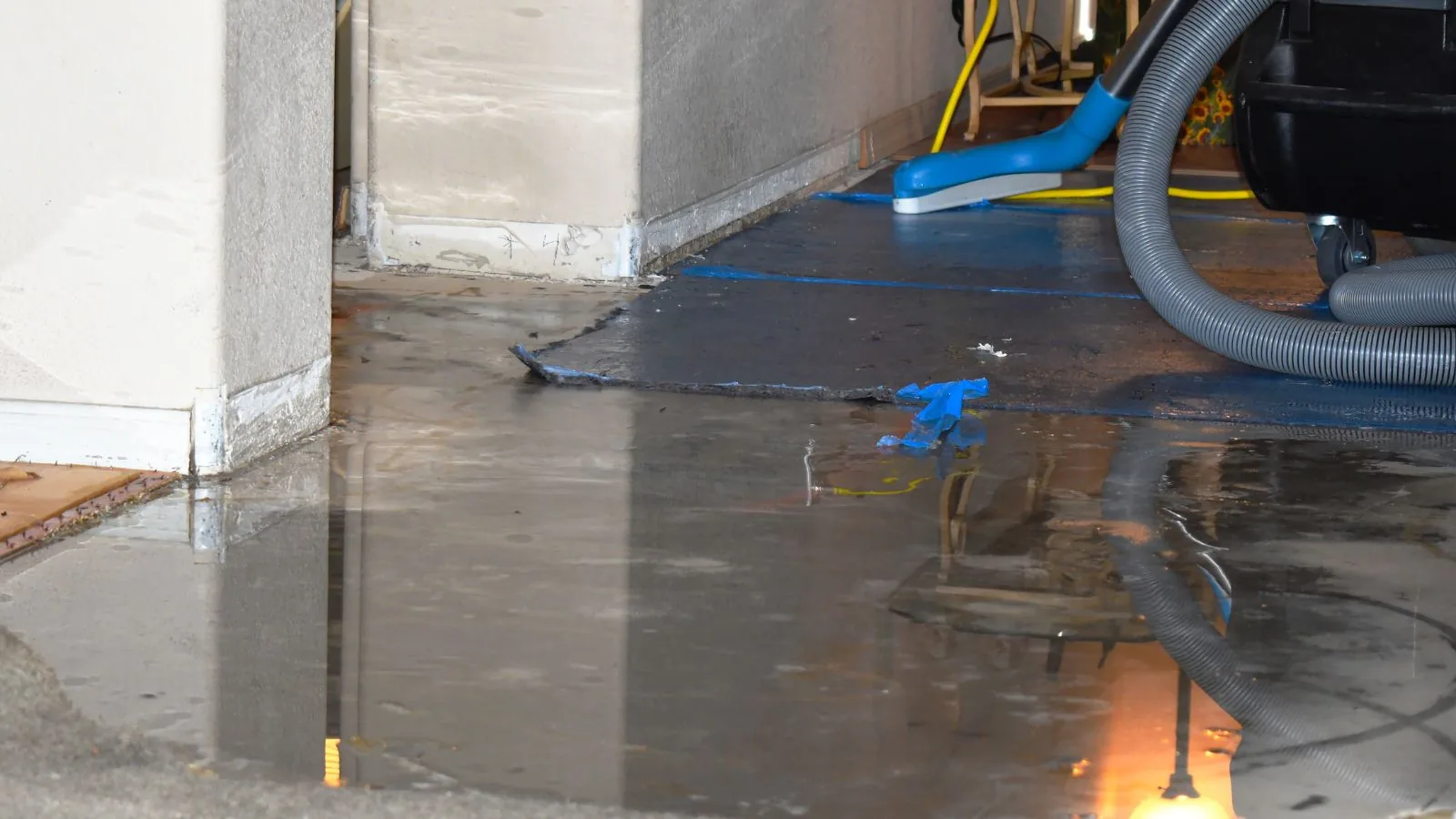
Standing water in an Avon home or business is an emergency. The (833) 521-1033 line is answered 24/7, nights and weekends included. While you wait for the call to connect, stop the source if you can reach the shutoff safely, keep everyone out of water that touches an outlet or panel, and lift valuables off the floor.
Water extraction is the removal of standing water with pumps and extraction units before any drying begins. It comes first because water that sits keeps moving, wicking into drywall, subfloor and framing a little further each hour.
When standing water is an emergency
Call right away when water is deeper than the baseboard, when it came from a toilet, drain or sewer line, or when it is near a panel, outlet or furnace. Those situations carry safety risks that a mop and towels cannot answer.
Stop the source
Close the nearest shutoff valve or the main water valve, but only if you can reach it without stepping into deep water.
Mind the electricity
If water reaches outlets or the panel, stay out and call the utility or 911 before calling us.
Lift what you can
Move small furniture, rugs, shoes and boxes to dry ground so they stay out of the wet zone.
Keep people clear
Keep children and pets out of any water that may be contaminated.
How extraction is done
Crews pick the tool by depth and surface. Submersible pumps handle several inches of water in a basement. Wand extraction units pull water from carpet and pad. Squeegee tools and weighted extractors work on hardwood and tile where water hides in seams.
Extraction does not finish the job. Surfaces can look dry while the subfloor and the bottom of the wall stay wet, so a technician follows up with moisture meters and, where needed, a thermal camera. Those readings decide whether structural drying comes next.
Water categories change the plan
| Category | Typical source | What it means for extraction |
|---|---|---|
| Category 1 | Supply line, sink overflow, rain through a roof | Cleanest water, but it degrades fast if materials stay wet |
| Category 2 | Dishwasher or washer discharge, sump overflow | Needs sanitizing, and porous materials are checked closely |
| Category 3 | Sewage backup, river or storm surge water | Hazardous, so porous materials are usually removed and the area is isolated |
Category 3 water is a different job with its own safety steps. The page on sewage backup cleanup explains how that work is contained.
What extraction looks like around Avon
The Farmington River forms Avon's western border, and the town's floodplain rules cover both the 1 percent and 0.2 percent annual chance floodplains. A property near the river corridor can take on water for different reasons than one up on Avon Mountain, so the first question is always where the water came from.
FEMA has been remapping flood zones across the Farmington River watershed, which includes all of Avon. Check the FEMA flood map for your address, and ask the Avon Building Department which map applies to your lot before you plan any rebuild.
Insurance and documentation
Sudden and accidental water damage is often covered by a homeowners policy, while flood damage is usually excluded and needs separate flood coverage. Check your policy or ask your insurer. Photos, moisture readings and an itemized scope help document the loss, and the Connecticut Insurance Department advises reporting a claim as soon as possible.
Crews work across Avon and the nearby towns of Unionville, Canton, Burlington and North Canton. If you are just south of town, the Unionville page explains how service reaches that side of the Farmington River.
What shapes the cost of extraction
Extraction cost depends on how much water there is, what kind of water it is, and what it has already touched. No honest number exists until someone sees the room.
- Water category, since contaminated water adds containment and disposal steps
- Depth and square footage of the affected area
- Materials involved, such as carpet and pad, hardwood or finished basement walls
- Whether drying equipment is needed after the water is out
- Rebuild scope once wet materials are removed
To get a scope for your own property, call and describe the room.
Call (833) 521-1033Questions about water extraction
Do you handle water extraction emergencies at night or on weekends in Avon?
Yes. The line is answered 24/7, including overnight and on weekends and holidays. Describe the water and a person explains the first steps while a crew is arranged.
How deep does water have to be before extraction is needed?
Even a thin film under carpet counts, because the pad holds water. Anything above the baseboard, or any water that came from a drain, calls for pumps and extraction units.
Can I use a wet vacuum from the hardware store?
For a small clean water spill, a wet vacuum helps. For larger loss, it leaves water in the pad and subfloor. Never use a household vacuum near water that touches electrical outlets.
What happens after the water is out?
Technicians map moisture, then set air movers and dehumidifiers if materials are still wet. Drying is checked with daily readings until the structure reaches its dry standard.
Does the work follow an industry standard?
Water damage work is commonly guided by ANSI/IICRC S500. Ask any company whether its crews work to it before you hire.