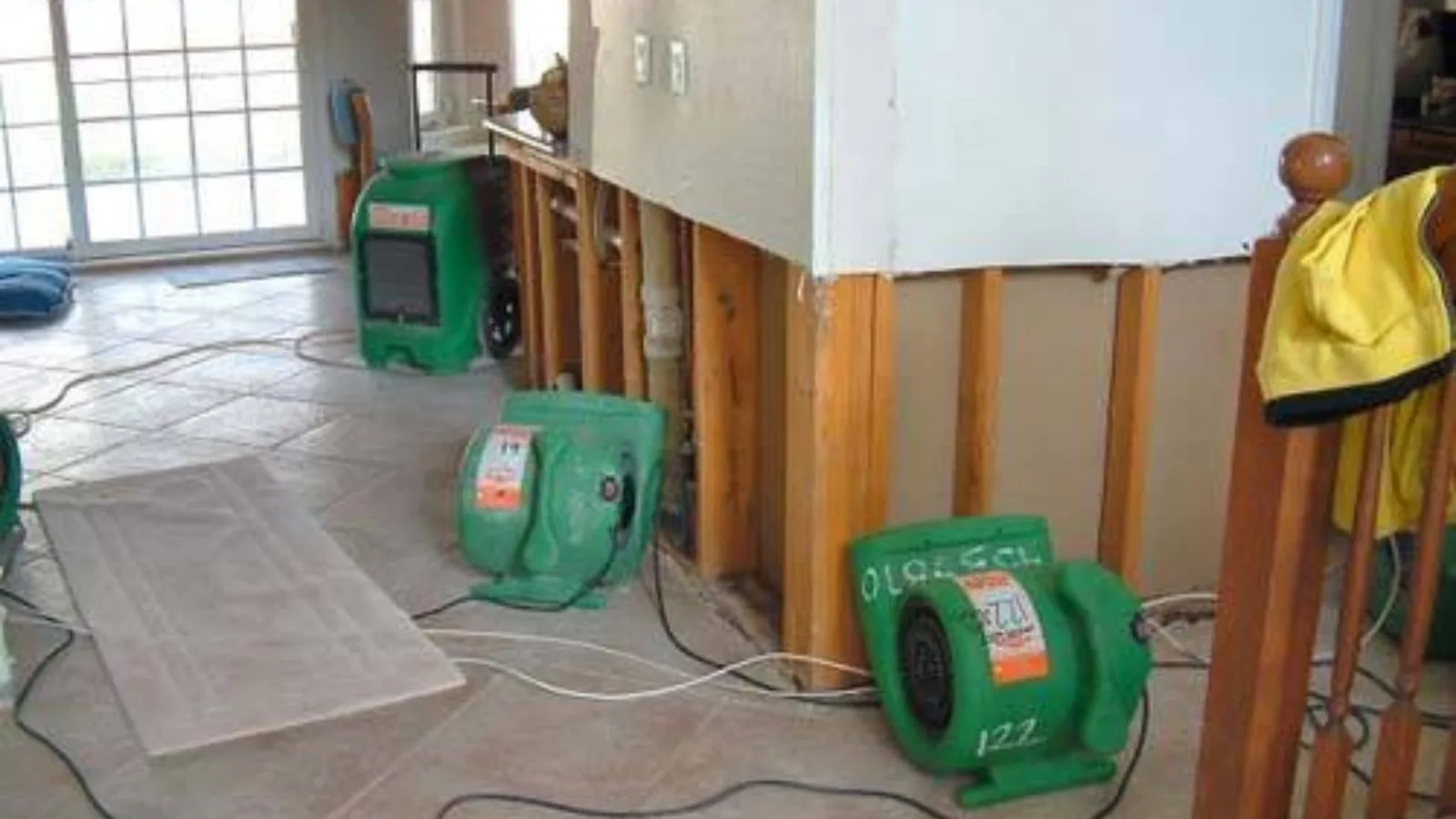
Wall and drywall water damage is the soaking of gypsum board, baseboards and the insulation behind them after a leak. Drywall is paper and gypsum, and it wicks water upward from the floor and sideways through a cavity. The 24/7 line at (833) 521-1033 is open if water is still behind the wall.
What water does to a wall
Gypsum softens when wet. Paint bubbles, tape seams open, and the board crumbles at the touch. Water can travel up the back of a wall several inches above the visible stain, and wet insulation inside the cavity keeps the framing damp.
| Sign | Likely cause | What technicians do |
|---|---|---|
| Bubbling paint, soft drywall | Moisture behind the board | Take readings and cut an inspection opening |
| Stain with a dark ring | Repeated or slow leak | Trace the source and map the wet area |
| Cracked tape seams | Swelling from absorbed water | Check for hidden moisture behind |
| Baseboard lifting | Water wicking up from the floor | Remove and dry the wall base |
Cut, dry and restore
- Remove baseboards and cut drywall a few inches above the wet line
- Pull wet insulation and let the cavity dry with air movers
- Use dehumidifiers and take daily readings on framing and board
- Clean and treat surfaces to limit mold growth
- Hang new drywall, tape, texture and paint, then reinstall trim
Cutting walls open is the part that surprises people. It is done only where readings show wet material, and a clean, straight cut is easier to repair than a large patch. Sometimes a wall can be dried in place through small holes, which readings decide.
Where wall water comes from
Common sources include pipe failures inside walls, leaks from fixtures and appliances, roof water that travels down a wall, and water that rises from a wet floor. The cause shapes the repair. A pipe in the wall is covered in the page on burst pipe water damage.
A wall that stays damp is a risk for mold. Mold needs moisture and time, so drying quickly matters, and mold cleanup follows ANSI/IICRC S520. Health questions belong to a physician.
Local rules and insurance
Drywall repair of a small area often does not need a permit, but rules vary by scope, so ask the Avon Building Department before you rebuild. Sudden leaks are often covered while slow leaks over time often are not. Check your policy or ask your insurer, and photograph the wall before it is opened.
Insulation, paint and the finish work
Fiberglass insulation that gets wet loses its value and holds moisture against the framing, so it is usually removed. Closed cell foam behaves differently and can sometimes be dried. After the cavity is dry, new insulation and board go in, followed by tape, joint compound and primer.
Matching paint takes care. Old paint fades, so a patch painted with the original color can show. Painters often repaint the whole wall to the nearest corner so the repair does not read as a patch.
Water in a wall often involves flooring too, covered at hardwood floor water damage repair. From the Avon base, crews reach Unionville, Canton, Burlington and North Canton, along with North Canton.
What shapes wall repair cost
Drywall is inexpensive to replace, but the work around it is what builds the total.
- Height and length of wall that is wet
- Insulation and framing condition
- Number of rooms and walls affected
- Texture, paint and trim matching
- Drying days before closing the wall
Call with the size of the stain and what is behind it.
Call (833) 521-1033Questions about wall and drywall water damage
Do all wet walls have to be cut open?
No. Readings decide, and some can be dried in place through small openings.
How far above the stain is the wall wet?
Water often travels several inches above the visible stain, so the cut line is set by readings.
Can I just paint over a stain?
Paint over a wet wall traps the moisture and hides a problem. Dry it and confirm with readings first.
How do you match the texture?
After the wall is dry, new board is taped, textured and painted to blend. A perfect match depends on the original finish.
Is wet drywall a mold risk?
Yes, if it stays wet. Prompt drying reduces the risk.