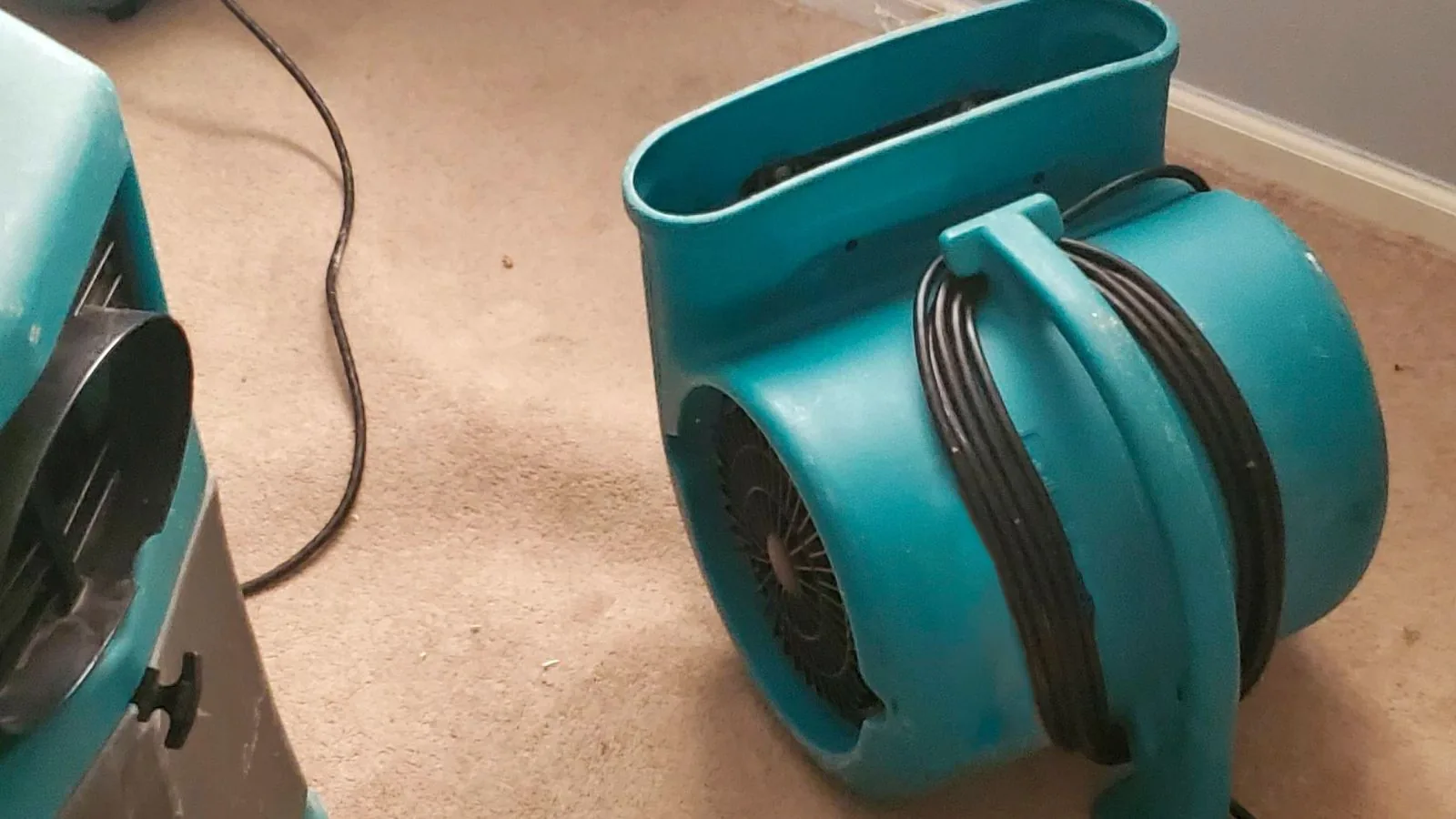
Structural drying is the controlled removal of moisture from walls, floors, ceilings and framing after a leak or flood. It uses moisture meters, air movers and dehumidifiers, with readings taken each day. The 24/7 line at (833) 521-1033 takes calls when water is still active.
Your walls feel dry but the room is still damp
Many people search for this problem by describing it: baseboards that feel cool, a musty room after a leak, or carpet that dried on top. The surface dries first. Water can stay in the subfloor, in the bottom of the wall cavity and behind cabinets for days, and that hidden moisture is what drying equipment is for.
That is structural drying, and it is the stage that decides whether a water loss turns into mold or rot. It is also where the term water mitigation applies, meaning the steps that stop damage from spreading.
How drying is run
Moisture mapping
Meters and a thermal camera find wet materials, including those behind walls and under floors.
Air movers
Fans push air across wet surfaces and pull moisture out of materials.
LGR dehumidifiers
Low grain refrigerant units lower humidity so water leaves the building materials.
Daily readings
A technician returns to record readings until materials reach their dry standard.
Why equipment runs for days
Drying is a physics problem. Air has to be warm and dry enough to take up water, and materials release it slowly. Dense materials such as hardwood, plaster and concrete hold water longer than carpet or drywall. Turning equipment off because the room feels dry risks leaving wet framing behind.
| Material | Typical drying behavior | What the readings show |
|---|---|---|
| Drywall | Dries quickly if opened | Surface and cavity moisture drop together |
| Hardwood and subfloor | Slow, sometimes with special mats | Moisture content falls toward the dry standard |
| Plaster and concrete | Very slow, needs sustained dehumidification | Several days of readings, sometimes more |
Daily readings are why a careful job produces a log. That log, together with photos, helps document the loss for an insurer and confirms the building is dry before it is closed up. Water damage drying work is commonly guided by ANSI/IICRC S500.
What drying means in an Avon house
A dehumidifier set in a basement near the Farmington River corridor or a hillside house up Avon Mountain works the same way, but the air itself matters. Connecticut summers are humid, and winter heating dries indoor air, so the technician adjusts equipment to the season and the house.
Drying follows the first cleanup step. See water extraction for removing standing water first, and carpet water damage restoration for the case where pad and carpet are involved.
Insurance and drying logs
Why equipment counts and placement matter
The number of air movers and dehumidifiers comes from the size of the wet area and the materials in it. Too little equipment lengthens the job, and too much wastes power. Crews place air movers to move air along walls and floors and set dehumidifiers where they can pull the most moisture from the air.
What to do before a crew arrives
- Keep doors and windows closed while equipment runs
- Do not unplug equipment or move cords
- Keep children and pets away from the equipment
- Note any odors and tell the crew at the daily visit
The industry reference for this work is ANSI/IICRC S500.
Insurers expect proof that drying was needed and finished. Moisture logs, photos and an itemized scope help. Whether your policy pays depends on the cause of the water, so check your policy or ask your insurer. The 24/7 line serves Avon and four neighbors, Unionville, Canton, Burlington and North Canton, including North Canton.
What shapes structural drying cost
Drying costs follow equipment count and days, which follow the size of the wet area and the materials in it.
- Square footage and number of rooms affected
- Materials, since dense ones dry slowly
- Number of air movers and dehumidifiers needed
- Days of monitoring and return visits
- Anything that must be removed to let a cavity dry
Call to discuss the area and the materials that got wet.
Call (833) 521-1033Questions about structural drying
How long does structural drying take?
Most jobs run several days, longer for dense materials. Readings decide, not the calendar.
Can I use my own fans and a household dehumidifier?
They help with minor dampness but rarely dry framing and subfloors. Commercial air movers and LGR units are built for this.
Why is the equipment so loud?
Air movers and dehumidifiers move large volumes of air, and the noise is the cost of drying the structure quickly.
Is the same as water mitigation?
Mitigation is the whole effort to stop damage from spreading, and structural drying is the stage that dries wet materials.
How do I know it is truly dry?
A technician compares readings with a dry reference reading from unaffected materials and records them.