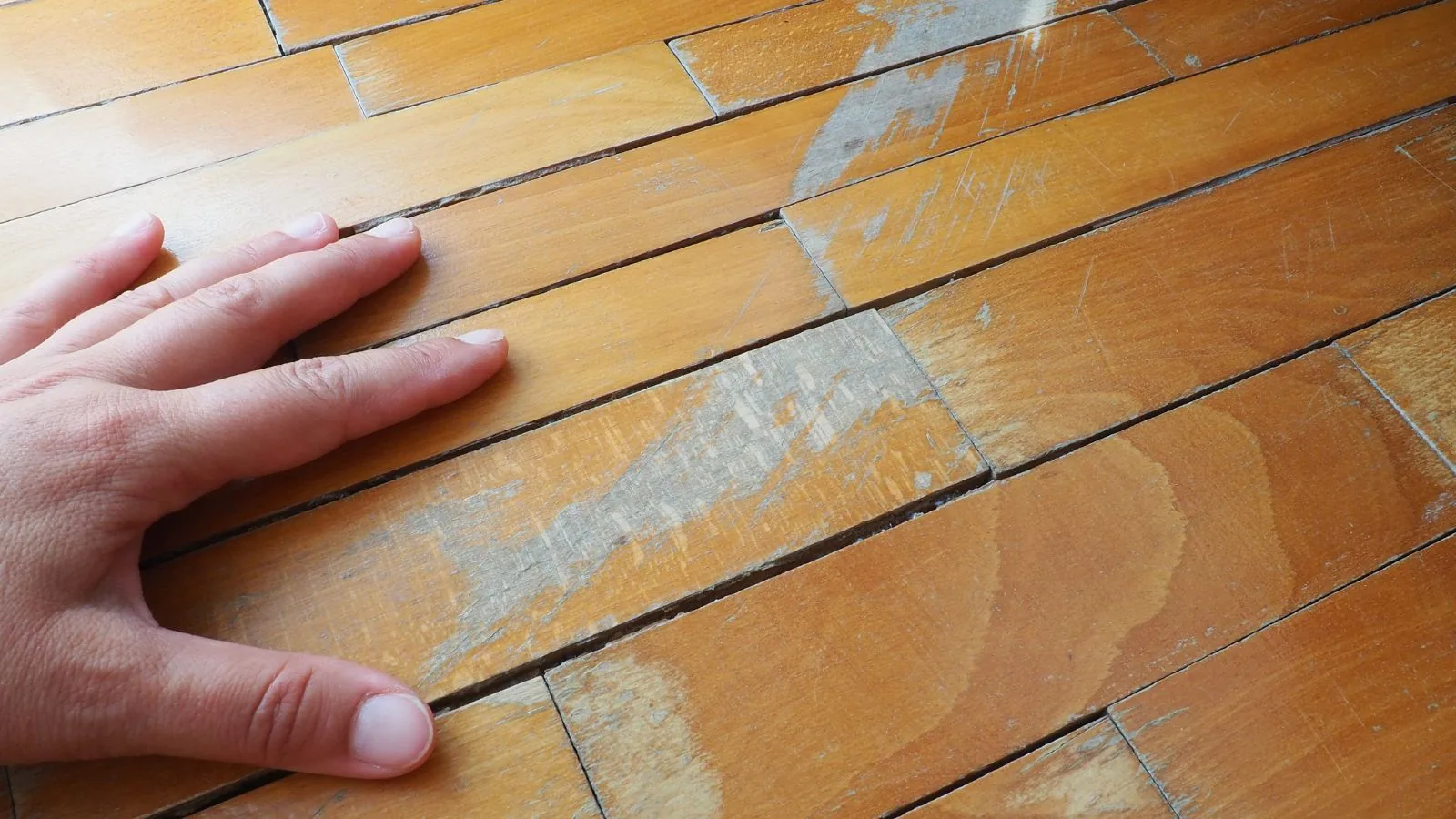
Hardwood floor water damage is the swelling, cupping or buckling of wood and laminate planks after they absorb water. Wood soaks moisture along the grain and from below, so a floor can look fine on top while the underside is wet. The 24/7 line at (833) 521-1033 is open if water is still reaching the floor.
Cupping, crowning and buckling
| What you see | What it means | Typical outcome |
|---|---|---|
| Edges higher than the center (cupping) | Moisture from below, often a slow leak | Often recovers if dried slowly and early |
| Center higher than the edges (crowning) | Moisture on top or after sanding wet wood | May settle after drying, then be sanded |
| Boards lifting off the subfloor (buckling) | Heavy or prolonged water | Sections usually replaced |
Laminate and engineered wood respond differently. Laminate swells at the edges and rarely returns to shape once the core board is wet. Engineered boards have a plywood core that can handle moisture better, but not for long.
How a wood floor is dried
Drying wood too fast can crack boards, so technicians dry gradually. Specialized drying mats pull moisture upward through the boards, and dehumidifiers keep the air dry enough to take it. Daily readings show whether the wood is moving toward a normal moisture content.
- Extract water and remove rugs and furniture from the floor
- Take moisture readings across the planks and subfloor
- Use mats, air movers and dehumidifiers in a controlled setup
- Check again over several days before deciding what stays
- Sand, refinish or replace sections after the floor is dry
Cupping can take weeks to settle, so a floor is judged after it has fully dried, not on the first day. Wood that sits under a wet pad or carpet is a related case, covered on the carpet water damage page.
Where the water often comes from
Common causes include a leaking dishwasher, a washing machine hose, a plumbing line below the floor and an overflowing air conditioner pan. A leak in a closet near a heating or cooling unit, such as the cases described under AC leak water damage, often shows up first as cupped boards near the closet door.
Whether hardwood over a basement or crawl space is at risk depends on the house. A floor above a damp lower level absorbs moisture from below even without a leak above it, which is why readings include the space under the floor.
Insurance and replacement
Sanding, refinishing and replacing boards
Once a floor is fully dry and has settled, a floor professional decides whether to sand and refinish or replace boards. Light cupping often sands flat. Boards that split, stain through or lift at the seams are replaced, and new boards are woven into the old pattern.
Stain color is the hard part. New boards are stained to match, and the finish is blended across the room so the repair does not stand out. Ask who handles this work, because some restoration companies subcontract it.
What to do before a crew arrives
- Wipe up standing water and lift rugs
- Do not cover wet boards with plastic or wax
- Keep furniture off the wet area
- Photograph cupping and stains before anything is sanded
ANSI/IICRC S500 sets out how water damage is classified, dried and documented.
Coverage depends on the cause, with sudden leaks often covered and gradual seepage often not. Read your policy or ask your insurer. Matching an old finish can be difficult, so keep photos of the floor before the damage if you have them. Work happens in Avon, Unionville, Canton, Burlington and North Canton, with trips to places such as the older homes around Avon Village Center.
What shapes hardwood floor cleanup cost
Wood floors are expensive to replace, so careful drying is often worth the effort when it works.
- Type of flooring: solid, engineered or laminate
- Square footage that is wet and how long it stayed wet
- Whether the subfloor is wet
- Drying method and days of equipment
- Sanding, refinishing or board replacement afterward
Call with the flooring type and the source of the water.
Call (833) 521-1033Questions about hardwood floor water damage
Can a cupped floor be saved?
Often yes, if drying starts soon and goes slowly. The decision comes after the wood is dry.
How long before I know if it is ruined?
Cupping can take weeks to settle, so the final answer waits for dry readings.
Why do you use drying mats?
They pull moisture upward through the boards, which dries them without removing the floor.
Does laminate dry out the same way?
Not usually. Laminate swells and rarely returns to shape once the core is soaked.
Should I sand it right away?
No. Sanding wet wood can trap moisture. Wait for dry readings.