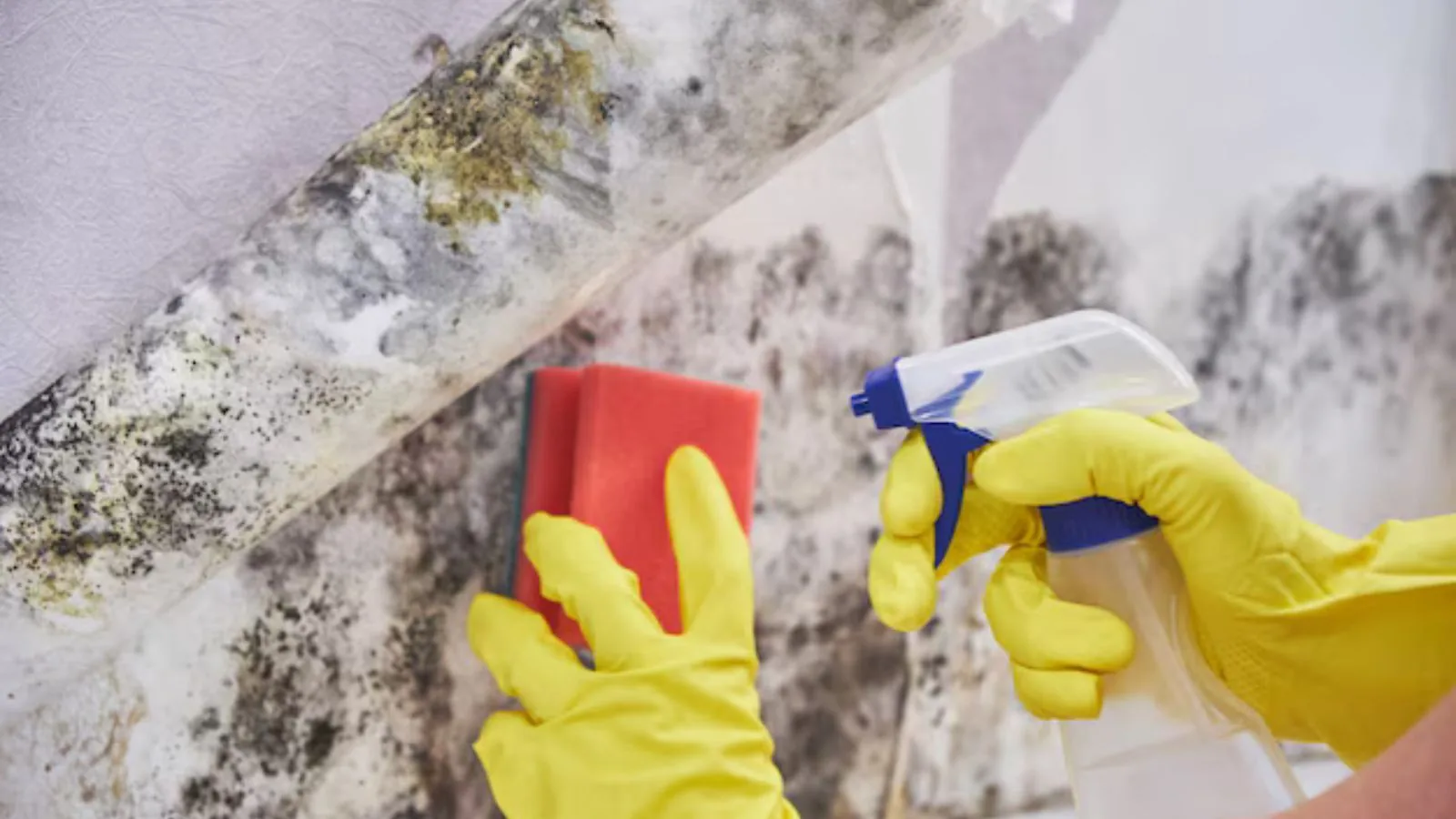
Mold remediation is the containment, removal and cleaning of mold growth, together with fixing the moisture that fed it. It often follows a leak that was never fully dried. If you see growth or smell something musty after water damage, call (833) 521-1033 and describe where it is.
This page explains the work and the questions to ask. It does not make health claims. If anyone in the home has symptoms or a medical concern, a physician is the right person to ask.
Mold starts with moisture, so start there
Mold needs moisture, a food source such as drywall paper or wood, and time. Remove the moisture and growth stops spreading. That is why a mold job begins with finding the water source and ends with a dry building, not with a spray bottle.
| Where it hides | Why it grows there | What is usually done |
|---|---|---|
| Behind a bathroom wall or under a vanity | Slow plumbing or steam leaks | Open the wall, remove damaged board, dry and clean framing |
| Basement walls and stored boxes | Seepage and humidity | Clean hard surfaces, discard porous materials, address moisture |
| Ceilings below a roof or pipe leak | Water stayed in insulation | Remove wet insulation and board, dry the cavity |
| Crawl space framing | Damp soil and poor airflow | Dry, clean and correct the moisture source |
The remediation process
- Walk the home, find the moisture source and map the affected area
- Set containment with plastic sheeting and negative air so spores are not spread
- Remove materials that cannot be cleaned, such as soaked drywall and insulation
- HEPA vacuum and damp wipe surfaces that can be saved
- Dry the area fully and take readings before anything is rebuilt
Containment is the step homeowners most often miss. Scrubbing growth without it can push spores into clean rooms. The work follows ANSI/IICRC S520, the standard for professional mold remediation.
Testing and clearance
Some homeowners want testing before the work, and some want it afterward to confirm the cleaning. Lenders and buyers sometimes ask for a clearance letter before a sale. A tester who is independent of the company doing the cleaning keeps the result neutral. The page on water extraction covers the earlier step of removing the water that feeds growth.
No test is claimed to tell you whether a home is safe. A clearance result describes what was found in that place at that time. Ask the tester what the report will and will not say before you book.
Connecticut registration
Connecticut's Department of Consumer Protection ties residential mold remediation to its Home Improvement Contractor registration. Ask any company whether it holds it. Applicants for that designation hold NORMI or IICRC certification. Commercial mold work falls outside that registration.
Permit rules for opening and rebuilding walls vary, so ask the Avon Building Department. Wells and septic questions in rural parts of Avon go to the Farmington Valley Health District, which also handles other environmental health questions for the area.
What to do while you wait
- Fix or stop the water source if it is safe to do so
- Keep the area closed off and avoid disturbing the growth
- Do not run a fan across the affected area, because it spreads dust
- Photograph the area before anything is moved
- Keep wet porous items out of the living space
Insurance
Mold coverage varies widely, and many policies limit or exclude it unless it follows a covered loss. Read your policy or ask your insurer, and keep photos and records. Homeowners in Avon, Unionville, Canton, Burlington and North Canton call this line, including those near the hillside homes near Huckleberry Hill. For a wet wall that may hide growth, see the page on wall and drywall water damage repair.
What shapes mold cleanup cost
Mold jobs vary because the hidden area is often larger than the visible patch.
- Size of the affected area and what is behind it
- Materials that must be removed and replaced
- Containment and negative air setup
- Moisture source repair, handled by the right trade
- Testing before or after, if you choose it
Call and describe what you see and where.
Call (833) 521-1033Questions about mold remediation
Can I just bleach mold away?
Bleach does not fix the moisture and does not reach into porous material. Remediation removes and cleans, then dries.
Do I need testing before cleanup?
Not always. Some people want it for documentation, and lenders sometimes ask for clearance afterward.
Is mold cleanup done under a standard?
Professional work follows ANSI/IICRC S520. Ask the company how it applies it.
Will insurance cover mold?
It depends on the cause and the policy. Many limit mold coverage. Check your policy or ask your insurer.
How long before I can use the room again?
After the area is dry and cleaned and, if you chose it, cleared. A technician gives a plan after seeing it.