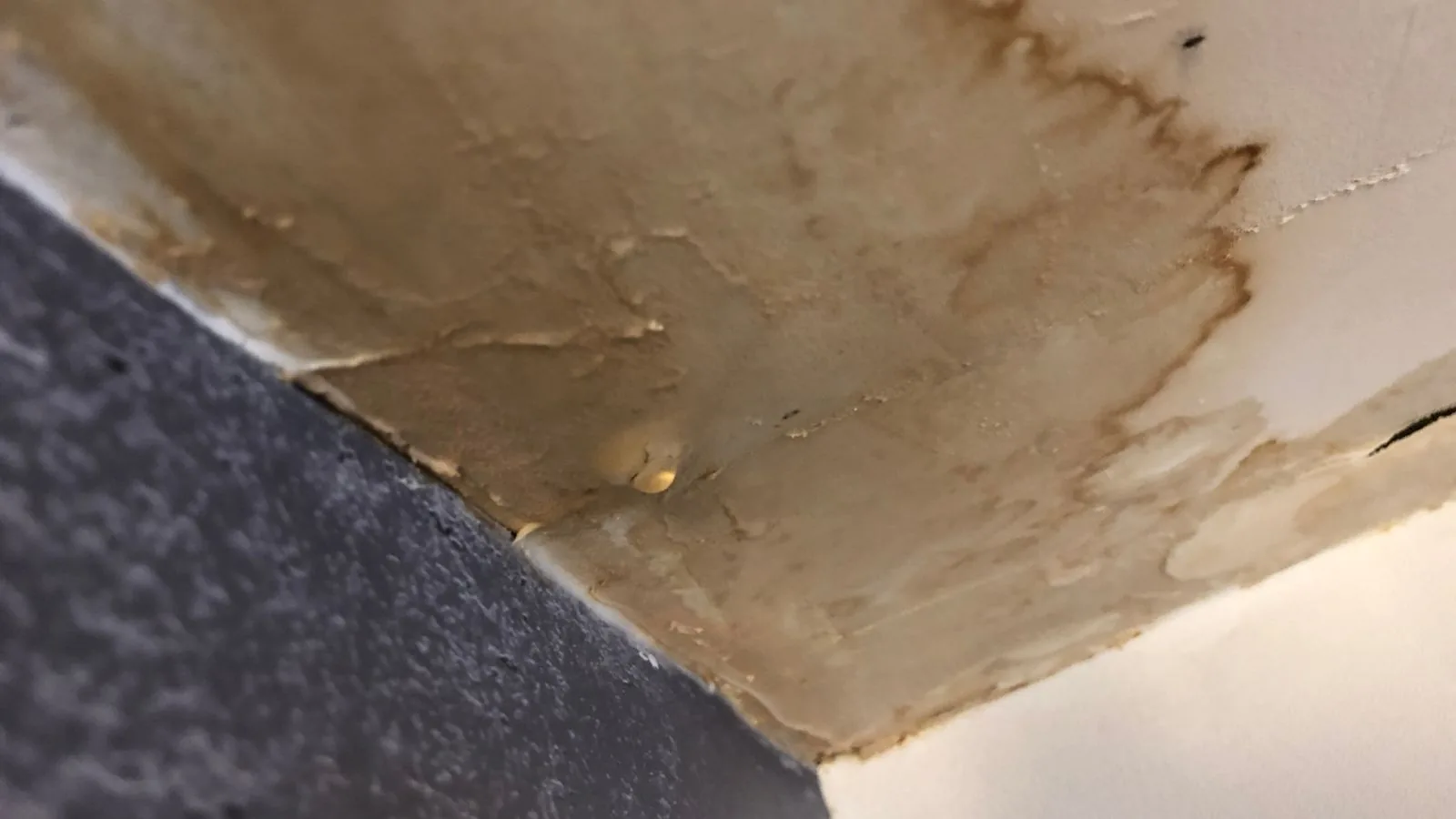
A hidden leak is one you cannot see, usually inside a wall, under a floor or beneath a slab. It announces itself in small ways first. A water bill that rises with no change in use, a musty smell, a warm spot on the floor or a stain that grows are the usual signs.
Clues to look for
- A water bill that is higher than usual with no change in habits
- The sound of running water when nothing is on
- A damp, musty smell in a room, closet or basement
- Stains, bubbling paint or peeling wallpaper
- Warm spots on a floor, or floors that feel soft
- Mold or mildew that returns after cleaning
Write down what you notice and when. A log of dates helps a plumber and an insurer. Take photos with a ruler or coin next to the stain so you can see whether it grows.
The water meter test
Turn off every faucet and appliance that uses water, including the ice maker and washing machine. Find the water meter and look at the dial or digital display. Note the reading, wait an hour or two without using any water, and check again. If the number moved, water is going somewhere.
Some meters have a small leak indicator, often a triangle or a dial that spins slowly. If it moves with everything off, there is a leak somewhere past the meter. Homes on private wells have no municipal meter, but a pressure tank that cycles often when no water is running is a similar clue.
Where leaks hide
| Place | Typical source | Clue |
|---|---|---|
| Under sinks and vanities | Supply lines and drains | Swollen cabinet floor, smell |
| Behind a tub or shower wall | Valve, drain or tile failure | Soft wall, stain on the room below |
| Ceilings below bathrooms | Drain lines, supply lines | Brown ring that grows |
| Inside exterior walls | Frozen or split pipe | Staining after a cold snap |
| Under a slab | Failed pipe in or under concrete | Warm floor spot, constant sound |
Appliance connections are common. A washing machine hose, dishwasher line, ice maker supply or water heater connection can drip for months. See appliance leak water damage and water heater leak cleanup for the cleanup that follows.
Professional tools
Plumbers use acoustic listening devices, pressure tests and cameras. Restoration crews use moisture meters and thermal cameras to map wet areas, which shows where water has gone even when the source is not yet found. A slab leak is a special case, covered on the slab leak water damage page.
Stop the water, then dry it
Once you suspect a leak, close the shutoff for that fixture or the main valve. Do not wait for a plumber to arrive while water runs. Then get the area dried. A leak fixed without drying leaves wet framing and insulation, and that is where mold starts.
Who fixes what
A plumber repairs pipes, and a restoration crew dries and rebuilds what water touched. The two jobs overlap in time, because open walls let both trades see the problem. Ask your plumber to leave the wall open until the crew takes readings.
Leaks from outside the house
Not every hidden leak is inside. A broken service line between the street and the house can saturate the ground and show up as a wet patch of lawn or a damp basement wall. A sprinkler line or a hose bib that leaks inside a wall can do the same. If the meter test shows water moving while everything inside is off, the service line and outdoor fixtures are the next places to check.
A plumber can locate the break with listening equipment, and the water utility can advise on which part of the line it owns.
Keeping a leak log
Write down the date you noticed each clue, the meter reading and what you did. Photograph the stain next to a coin every few days. A log helps a plumber narrow the search, and it helps your insurer see when the problem began. It also keeps you from forgetting details when you are stressed.
What to do before a crew arrives
- Shut off the main valve if you hear water running
- Do not cut into a wall near wiring
- Photograph the stain next to a coin for scale
- Call a professional when readings show a wet wall
For the technical side, ANSI/IICRC S500 is the standard a careful company works from.
Local help
If you find water you cannot explain in your Avon home, call (833) 521-1033. Crews serve West Avon, North Canton and Unionville.
What Avon water tests say about household pipes
The 2024 Connecticut Water consumer confidence report for the Avon system lists a copper 90th percentile of 0.502 parts per million, with one of 32 sampled homes above the action level. The report lists corrosion of household plumbing as the source, a reminder that interior pipes age.
Avon's water comes from groundwater wells, and its sewer service is run by the Town. A leak inside your house is your responsibility, while a break in the service line near the street may belong to the utility. Ask Connecticut Water which part is whose.
Questions homeowners ask
How do I know if I have a slab leak?
A warm floor spot, running water sounds and a high bill are clues. A plumber can confirm it.
Can I use the meter test with a well?
There is no municipal meter, but a pressure tank that cycles with no water in use is a similar sign.
Will a hidden leak void my insurance?
Slow leaks are often excluded as maintenance. Check your policy.
Do thermal cameras find leaks?
They show temperature patterns that suggest wet areas. Meters confirm moisture.
Who do I call first?
If water is active, stop it and call a restoration company. Call a plumber to fix the pipe.