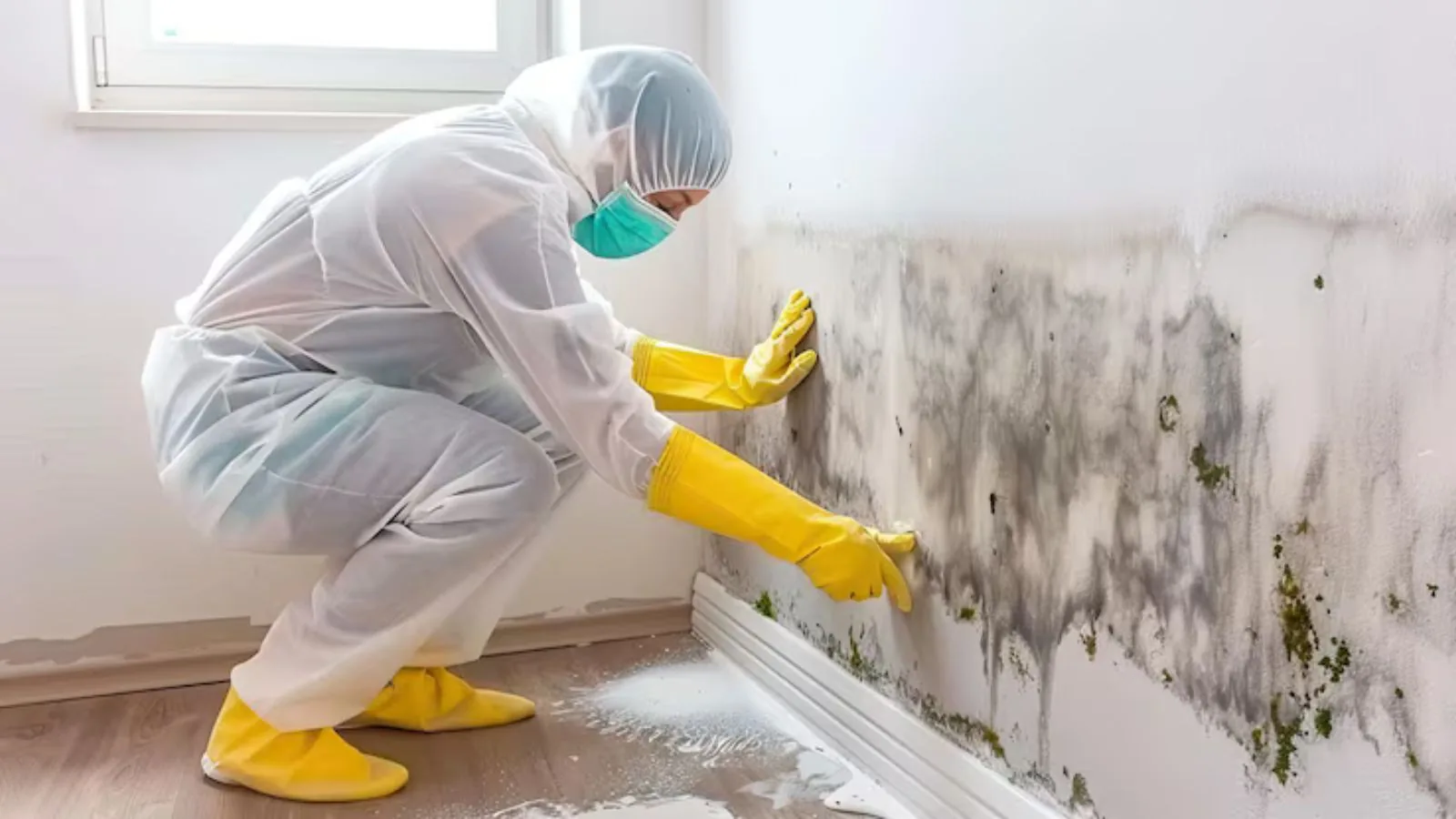
Bathrooms are where most homeowners first meet mold. Warm air, steam and slow evaporation give it everything it needs. This guide covers what you can safely clean yourself and when the problem is bigger than the visible spot. It makes no health claims, and anyone with symptoms should ask a physician.
Know what you are looking at
Dark spots on grout, shower caulk and the ceiling above the shower are the most common sites. A small patch on a hard, nonporous surface can usually be cleaned. Growth on drywall, a soft spot in a wall or a musty smell with no visible source is different, because it may be inside the wall.
| What you see | Likely meaning | Reasonable next step |
|---|---|---|
| Black dots on grout or caulk | Surface growth from steam | Clean, dry and replace failed caulk |
| Mold on the ceiling above a shower | Poor ventilation | Clean, run the fan longer, check the fan vents outside |
| Stain or soft spot on drywall | Moisture behind the surface | Stop cleaning and find the leak |
| Musty smell, nothing visible | Hidden damp area | Check under the vanity and behind the tub wall |
Cleaning a small patch
- Open the window or run the fan and keep the door closed to the rest of the house
- Wear gloves, eye protection and a mask rated for dust
- Scrub hard surfaces with detergent and water, then wipe dry
- Replace grout or caulk that stays dark after cleaning
- Never mix cleaning products, especially bleach with ammonia
Wipe, do not spray widely. Spraying can spread spores into the air. After cleaning, dry the surface completely with a towel, because leftover moisture invites regrowth. Throw away sponges and cloths you used on the mold.
Why it keeps coming back
If mold returns within weeks, the cleaning missed the cause. The usual culprits are a bathroom fan that does not vent outside, a fan that is too weak for the room, a slow leak at a drain or supply connection and a shower pan or tile that lets water behind it.
A fan that vents into the attic dumps steam where it condenses on cold roof boards. Look for the vent cap outside. A hidden leak under a vanity soaks the cabinet floor and the wall behind it, which is why a search for hidden leaks belongs on a mold checklist. Water that has soaked drywall follows the path described under wall and drywall water damage repair.
When to stop and call a professional
- Growth covers a large area or has spread to drywall
- The wall is soft, stained or smells musty after cleaning
- There has been a leak or flood in the room
- The mold returns after you cleaned and dried it
- You live with someone who has a medical concern about mold
Remediation companies contain the area so spores do not spread to clean rooms, remove damaged material and dry the space. The work follows ANSI/IICRC S520. Details on the process are on the mold remediation page.
Keeping the bathroom dry
Run the fan during a shower and for about twenty minutes after. Squeegee glass and tile when you finish, hang towels so they dry and wash bath mats regularly. Fix a dripping faucet quickly. Check caulk every few months and replace it when it cracks or darkens.
A dehumidifier can help in a bathroom without a window, though it does not replace a working fan. Keep the cabinet under the sink uncluttered so a leak is easy to spot. Rooms that stay damp for long periods are where mold becomes a recurring chore instead of a one time fix.
Replace caulk with a mold resistant product after cleaning and drying, and give it the full cure time before using the shower.
Choosing a better bathroom fan
Fans are rated in cubic feet per minute. A common guideline is about one cubic foot per minute for each square foot of floor area, with a minimum of fifty. A quiet fan gets used more often, which helps. Pick one that vents outdoors through a duct that slopes slightly downward and ends at a proper cap.
What to do before a crew arrives
- Wear gloves, eye protection and a mask
- Ventilate the room and keep the door closed
- Never mix bleach with other cleaners
- Stop if the wall is soft and call a professional
Local help
If you find a wet wall or ceiling in your Avon home, call (833) 521-1033. Crews serve West Avon and Canton as well as Burlington.
Connecticut humidity and bathroom fans
The NOAA climate normals for Bradley Airport near Hartford show about 45.85 inches of precipitation in an average year. Humid summers mean the air coming through a bathroom window is already damp, so a fan that vents outdoors does more work than an open window in July.
The same normals show winter nights that average about 20.7 degrees Fahrenheit at their coldest. Steam from a hot shower can condense on a cold exterior wall in January, which is one reason a poorly vented bathroom on an outside wall grows mold in winter.
Questions homeowners ask
Is bathroom mold dangerous?
Anyone with health concerns should ask a physician. This guide covers cleaning and moisture control only.
Can I use bleach on bathroom mold?
Bleach works on hard surfaces and does not reach into porous material. Never mix it with other cleaners.
How do I know if mold is inside the wall?
A soft wall, a stain that grows or a smell with no visible source are signs. Moisture readings can confirm it.
Does a new fan help?
If the old fan is weak or vents into the attic, a properly vented fan helps a great deal.
Does Avon require a permit for bathroom work?
Rules vary by scope, so ask the Avon Building Department before opening walls.