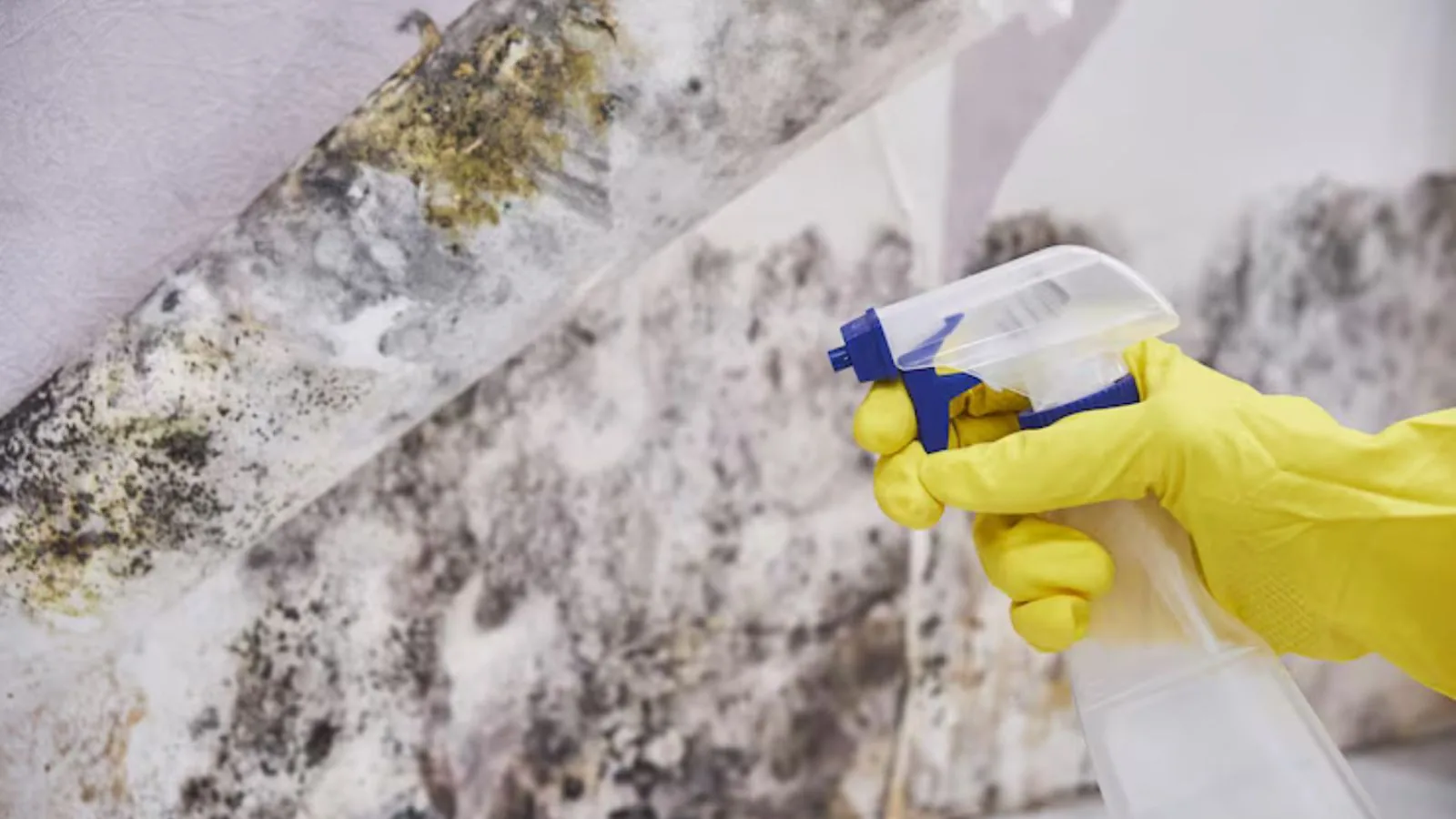
Every mold product makes big promises, and most of them are fine on the right surface. The problem is the wrong surface or the wrong cause. This guide sorts products by what they can and cannot do. It does not endorse brands, and it makes no health claims.
Start with the surface
Hard, nonporous surfaces such as glazed tile, glass, metal and sealed fiberglass clean well. Semi porous surfaces such as grout and unsealed wood are harder. Porous materials, including drywall, ceiling tile, insulation and carpet, absorb mold into their structure, and surface cleaners do not reach it.
| Surface | Can a product help? | Better answer |
|---|---|---|
| Glazed tile and glass | Yes | Detergent and water, then dry |
| Grout | Partly | Scrub, then seal or regrout |
| Painted drywall | Only for surface staining | Cut out if soft or stained deep |
| Insulation and carpet pad | No | Remove and replace |
| Framing lumber | Limited | Clean and dry, sand only under containment |
Common products and their limits
- Plain detergent and water remove surface growth and are the first choice for small hard surface jobs
- Household bleach whitens a stain on hard surfaces but does not penetrate porous material
- White vinegar is a mild cleaner some people use on small patches
- Hydrogen peroxide cleaners work on some surfaces and can discolor others
- Fogging and spray treatments that claim to kill spores do not remove the moisture problem
Read every label, wear gloves and eye protection, and ventilate the room. Never mix products. Mixing bleach with ammonia or acidic cleaners can produce dangerous fumes, and it is one of the most common household chemical mistakes.
Why a product alone fails
Mold is not a stain. It is growing because something is wet. A product removes the visible growth for a while, but the next steamy shower or damp week brings it back. The fix that lasts is finding the water source. A search for hidden leaks, such as under sinks and behind tub walls, shows where to look.
Painting over mold, or using a coating that promises to lock it in, covers the problem and traps moisture. If the surface was damp when painted, the new paint can blister and the growth continues underneath.
Dehumidifiers and air cleaners
A dehumidifier lowers the humidity that mold likes. It is a prevention tool for damp basements and bathrooms, not a cleaner. A HEPA air cleaner can capture airborne particles, but it does not remove growth from walls. Both help only when the moisture source has been dealt with.
When the answer is not a product
- The area is larger than a few square feet
- Drywall, insulation or carpet pad is involved
- The mold followed a flood, a pipe burst or sewage
- The smell continues after cleaning
- A buyer, lender or landlord is asking for documentation
In those cases containment, removal and drying are the answer. The process is described on the mold remediation page. A wet basement is covered under basement water damage cleanup.
Questions to ask before buying
Does the label say it is for the surface in front of you? Does it say what ventilation is needed? Does it promise that mold will never return? Be wary of that last kind of promise, because nothing can prevent regrowth in a damp room. Moisture control is the prevention.
Reading the label like a skeptic
Look for the active ingredient, the surfaces it is meant for and the contact time. Terms like kills 99 percent or eco friendly are marketing. The label that matters is the one that lists directions, precautions and what not to mix. If it does not, put it back.
Keep the receipt and the product in its original container. If something goes wrong, the label tells poison control what you used.
Storing and disposing of products safely
Keep cleaners in their original containers, away from children and pets, and never store bleach near ammonia based products. Check your town's guidance for disposing of leftover chemicals, and do not pour large amounts down the drain. Rags used on mold go into a sealed bag before they go in the trash.
What to do before a crew arrives
- Read the label and follow the directions
- Test any product on a small hidden spot
- Keep children and pets out of the room
- Dispose of rags in a sealed bag
Ask any company which parts of ANSI/IICRC S500 it applies to your job.
Local help
If cleaning has not worked in your Avon home, call (833) 521-1033. Crews serve Huckleberry Hill, North Canton and Unionville.
Why Connecticut basements invite mold
NOAA records for Connecticut show about 2.3 days a year with two inches or more of rain. Those are the days that raise basement humidity and push seepage through foundation walls. The wettest year on record at the state level was 2011, with 63.7 inches.
A dehumidifier that runs through the wet months is the simplest mold prevention you can own. Empty it or drain it to a floor drain, and check for a full bucket in the morning.
Questions homeowners ask
What is the best product for mold on tile?
Detergent and water, then drying, works on glazed tile. Product labels should match the surface.
Does bleach kill mold inside drywall?
It does not reach into porous material. Soft or stained drywall is usually cut out.
Can I fog my basement for mold?
Fogging does not fix the moisture and does not remove growth. Address the water source first.
Do I need a respirator?
Wear at least gloves, eye protection and a dust mask for small jobs. For anything larger, hire a professional.
Will paint stop mold from returning?
No. Paint over a damp surface can trap moisture. Dry the area first.