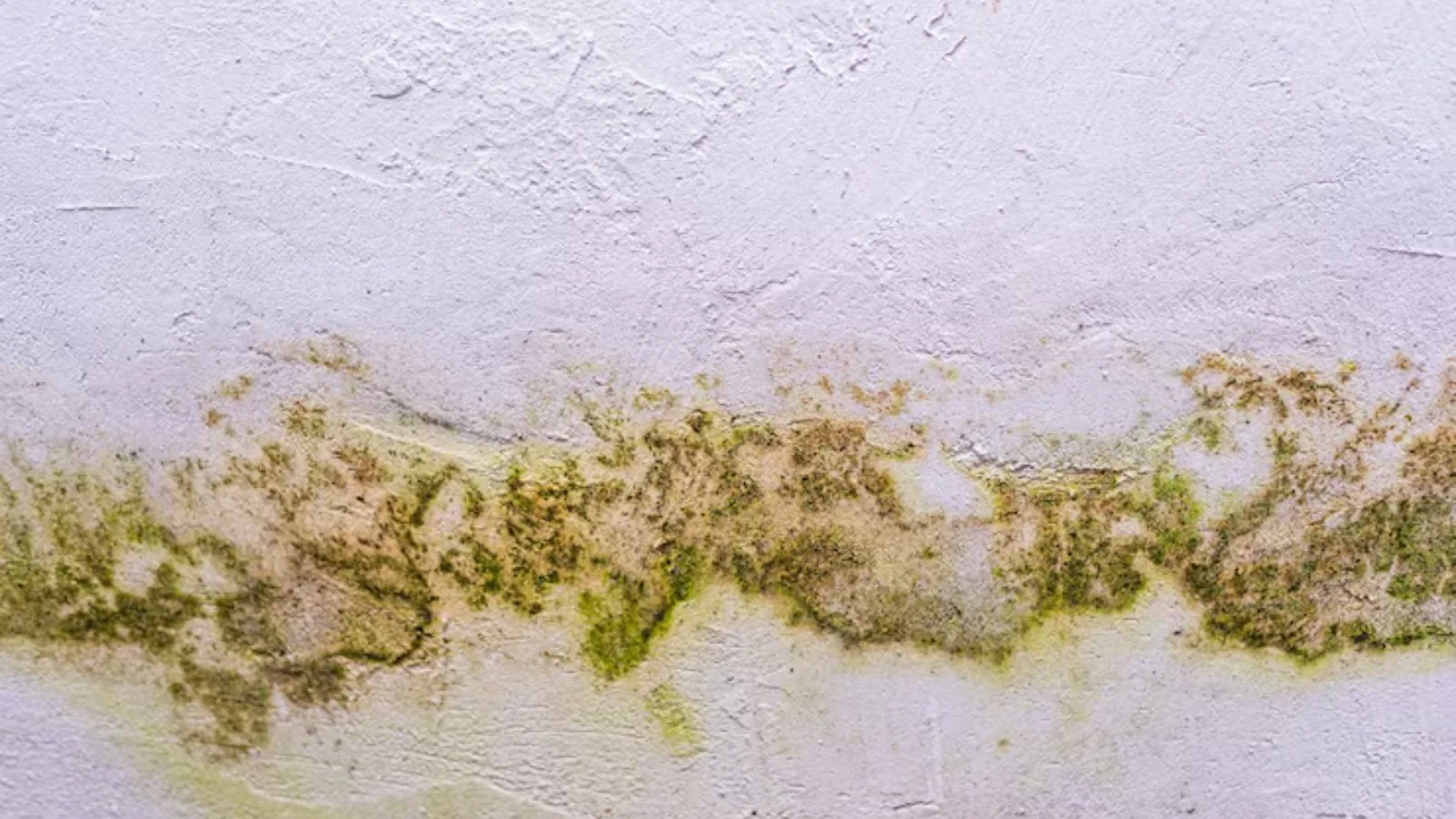
Mildew is usually a surface growth that looks powdery or downy and is white, gray or yellowish. Mold is a wider term for fungal growth that can be black, green, blue or other colors and may be fuzzy or slimy. Mildew is a kind of mold, so the question is practical: how deep does it go?
How they look and feel
| Clue | More like mildew | More like mold |
|---|---|---|
| Color | White, gray or pale yellow | Black, green, blue, orange or mixed |
| Texture | Flat, powdery or downy | Fuzzy, slimy or raised |
| Location | Surface of shower tile, window sills, fabric | Drywall, ceilings, wood, insulation |
| Smell | Light musty smell | Stronger, earthy or sour smell |
| Effect on material | Surface only | May penetrate and stain deeply |
Color alone is unreliable. Lighting changes what you see, and many species look similar. A test in a lab is the only way to name a species, and for most homeowners naming it is not the point. What matters is where it is growing and why.
Where each tends to show up
Mildew appears on surfaces that stay damp but are not eaten into by water. A shower curtain, a tile grout line and a window sill with condensation are classic places. It wipes away with a cleaner and often returns if the room stays humid.
Mold tends to grow into materials that stay wet. A ceiling stain under a roof leak, drywall behind a plumbing leak and a damp basement wall are common spots. Cleaning the visible patch does not solve it because the growth continues behind the surface. See ceiling water damage repair for what a wet ceiling involves.
What to do about each
- For a surface patch on hard material, clean with detergent and water, then dry completely
- For growth that returns, find the moisture source
- For soft, stained or crumbling material, stop cleaning and call a professional
- For a musty smell with nothing visible, check behind walls and under floors
- For a large area, contain the space and call for help
Wear gloves and a mask for cleaning, and ventilate. Small hard surface jobs can be cleaned with detergent and water, then dried completely.
Moisture is the real question
Whether you call it mold or mildew, both need moisture. A relative humidity that stays high, a leak or condensation on cold surfaces supplies it. Fix the moisture and the growth stops. Ignore it and the same patch comes back, larger.
A hygrometer, available for a few dollars, shows indoor humidity. Many experts suggest keeping it below a certain range, but the right target depends on the season and the house. A dehumidifier and a working bathroom fan do most of the prevention in a typical home.
When it is time to call someone
Call a professional when the growth is wide, when it is on porous material or when it followed water damage. A crew assesses the area, contains it and removes what cannot be cleaned, following ANSI/IICRC S520. The mold remediation page explains the process.
A note on health questions
This guide does not discuss health effects. People react differently, and some have medical conditions that make a physician the right contact. If you or someone you live with has symptoms, ask a doctor and tell them about the home conditions.
Where to look in a typical Connecticut home
- Window sills and sashes that collect condensation in winter
- The back of closets on exterior walls
- Under sinks and behind toilets
- Around basement windows and along the base of foundation walls
- The underside of carpet and pad in damp rooms
- Attic roof sheathing above bathroom fan vents
Check these places a few times a year. Catching a small patch early is easier than dealing with growth that has spread. A flashlight and a few minutes are all you need.
A quick home test of moisture
A moisture meter costs little and shows whether a wall or a floor is wet. Press the pins against the surface and compare the reading with a similar area that is dry. A reading that is much higher than the comparison suggests moisture is present. It does not name the growth, but it points you to the cause, which matters more.
Local help
If you find growth after a leak in your Avon home, call (833) 521-1033. Crews serve Huckleberry Hill, Canton and Burlington.
Winter condensation in Connecticut homes
Hartford area normals show about 40.5 inches of snow in an average year and winter nights that average around 20.7 degrees Fahrenheit. Warm indoor air meeting cold windows and outer walls causes condensation, which is why mildew often shows up on window sills and in closets on exterior walls in winter.
Closets on outside walls, behind furniture pushed against them and in unheated corners are the places to check. A little air movement and a small dehumidifier go a long way.
Questions homeowners ask
Is mildew less serious than mold?
Mildew is usually a surface problem. Mold can penetrate materials. Both need moisture control.
Can I tell by color?
Not reliably. Many species look alike, and lighting changes what you see.
Do I need a lab test?
Not to decide how to clean a small patch. A test only identifies species.
Does vinegar kill both?
Some people use it on small hard surface patches. It does not fix moisture.
When does a smell mean hidden mold?
A musty smell with no visible source can mean a damp area behind a wall or under a floor.