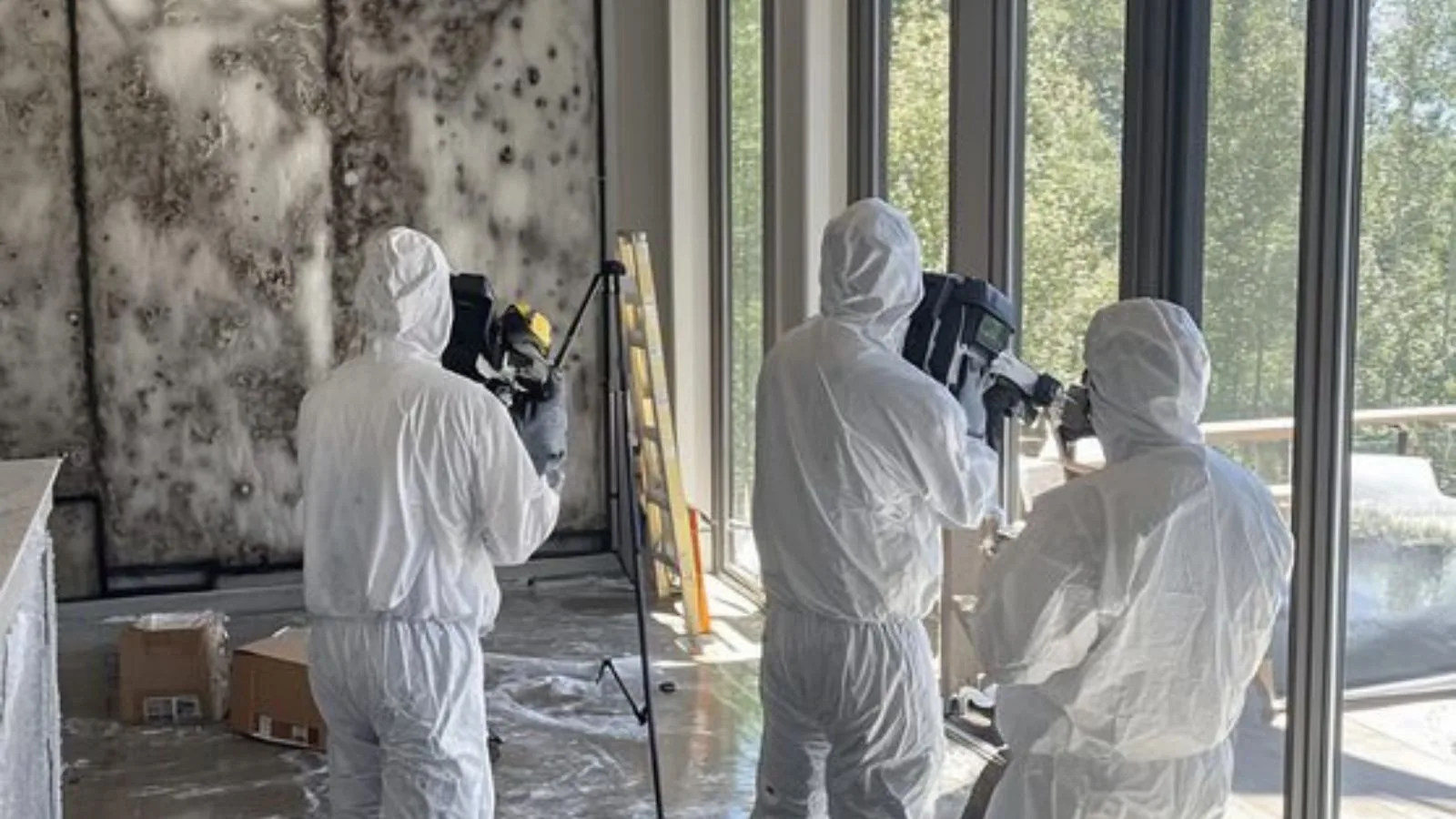
Professional mold removal, more accurately called remediation, is a controlled process. The aim is to remove mold from the building without spreading it, fix the damp conditions that fed it and leave the area dry and clean. This guide describes what that looks like and what to ask before you hire anyone.
What a careful job includes
- An assessment of the area and a search for the moisture source
- Containment with sealed plastic and a negative air machine
- Protective equipment for the crew
- Removal of porous materials that cannot be cleaned
- HEPA vacuuming and damp wiping of surfaces that stay
- Drying, then a check with moisture meters
Containment is the signature of a careful crew. Without it, sanding or tearing out a moldy wall can send spores through the house. Look for sealed plastic and a machine that keeps the work area at lower air pressure than the rest of the home.
The standard behind the work
ANSI/IICRC S520 is the standard for professional mold remediation. Ask a company how it applies the standard to your project, in plain words. A good answer mentions containment, source control and drying. A weak answer leans on proprietary sprays.
Connecticut registration
The Connecticut Department of Consumer Protection ties residential mold remediation to its Home Improvement Contractor registration. A company working in your home should be able to tell you whether it holds that registration and the mold remediator designation that goes with it. Applicants hold NORMI or IICRC certification. Commercial mold work falls outside that registration.
Ask any company whether it holds the registration, and check the state's lookup yourself rather than trusting a card. This site does not claim any registration for itself. Verify what any company tells you.
Testing and who does it
Testing can happen before the work to document conditions and after to confirm the cleaning. A tester who is independent of the remediation company keeps the result neutral. A clearance report describes what was found at a point in time. It is not a promise about the future, and it makes no health statement.
| Question | Why it matters |
|---|---|
| Who tests, and are they independent? | A neutral tester has no stake in the result |
| What will the report say? | You want to know its limits before you pay |
| Is the sampling method explained? | Methods differ and affect the result |
| Will the report be accepted by a lender or buyer? | Ask the party that asked for it |
Reading an estimate
A good estimate lists the area, the materials to be removed, the containment method and the drying plan. Be wary of a single line that says mold remediation and a total. The scope and price should be explained before work starts. If a company refuses to put the scope in writing, that tells you something.
Remediation does not include repairing the plumbing that leaked. A plumber does that, and the crew coordinates so the source is fixed before walls close. For wet wall repair see wall and drywall water damage repair.
What you can do while you wait
- Stop the water source if it is safe to do so
- Keep people and pets out of the affected room
- Keep fans off in the area, since they spread dust
- Photograph the area before anything is moved
- Call your insurer if the mold followed a covered loss
After the work is done
When remediation ends, ask for a written summary of what was removed, what was cleaned and what readings show the area is dry. If you chose clearance testing, the tester delivers a report. Keep both with your home records. Buyers, lenders and insurers sometimes ask for them years later.
Walk the area with the crew lead before you sign off. Look for staining that remains, damp spots and any smell. A good company is happy to answer questions and will return to fix a missed spot. Ask about any warranty in writing, and read what it covers and for how long.
Warning signs in a proposal
- No mention of containment or negative air
- A promise that mold will never return
- Pressure to sign today with no written scope
- No explanation of the moisture source
- A claim that one product treats every kind of growth
Any one of these is a reason to ask more questions. A company with a clear process welcomes them.
Local help
If you need help in Avon, call (833) 521-1033 to describe what you see. More on how mold work runs is on the mold remediation page. Crews serve Avon Old Farms, Canton and Burlington.
Where Avon residents take mold and permit questions
The Avon Building Department at Town Hall, 60 West Main Street, answers permit questions for opening and rebuilding walls, and it runs an online portal. Rules vary by scope.
Homes on wells or septic can also raise environmental health questions, which belong with the Farmington Valley Health District on River Road in Canton.
Questions homeowners ask
Is mold remediation the same as mold removal?
The terms are used loosely. Remediation implies containment, removal, cleaning and drying under a standard.
How do I check a company's registration?
Use the Connecticut Department of Consumer Protection lookup and ask the company which registration it holds.
Does the company that cleans also test?
It can, but an independent tester keeps the result neutral.
Can mold return after remediation?
If the moisture source remains, yes. Drying and fixing the source are part of the job.
Will my insurer cover it?
Mold coverage varies and is often limited. Check your policy.