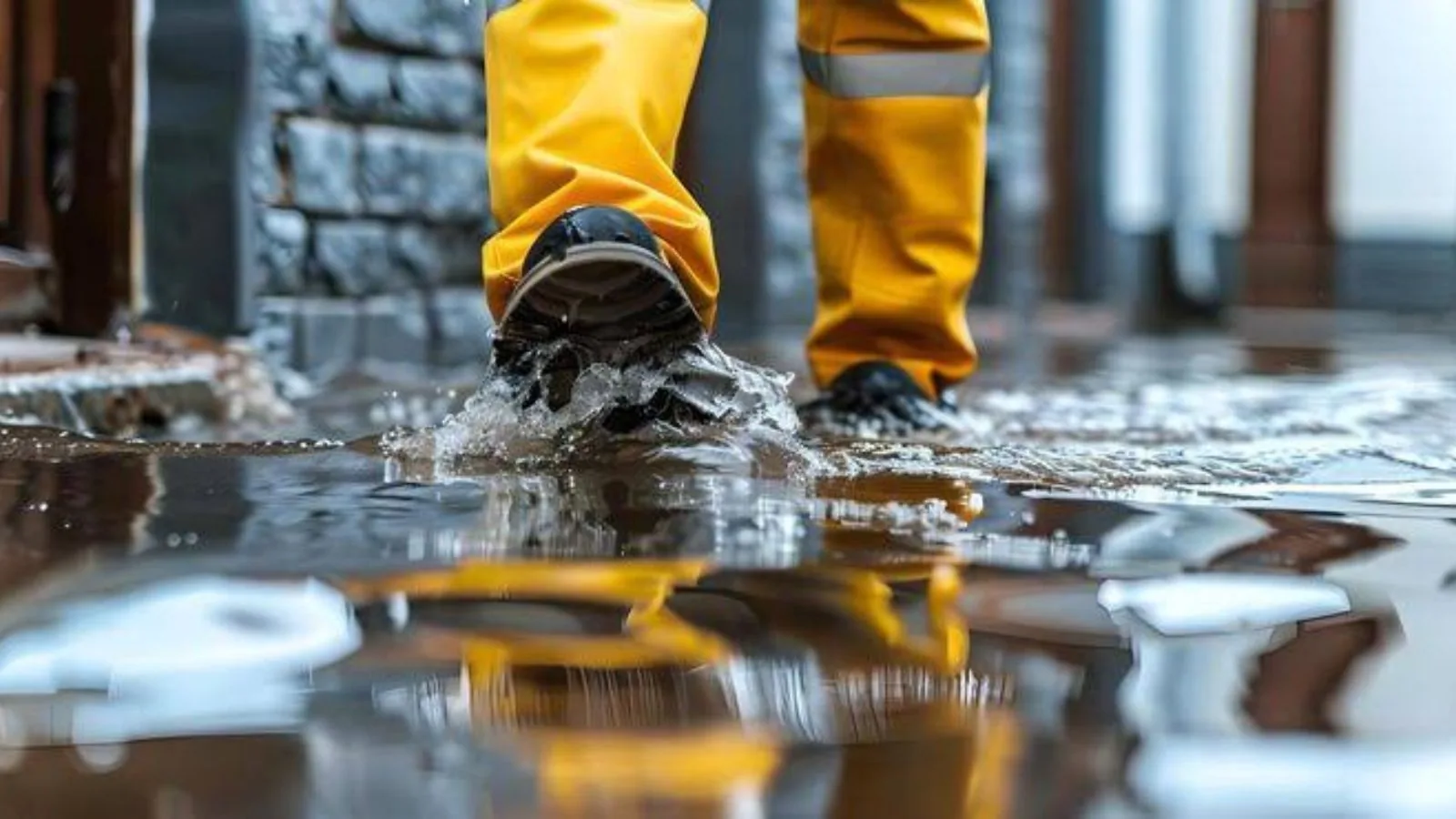
Not every wet spot needs a crew. A cup of water on a tile floor does not. What matters is the amount of water, how long it stood, what it touched and what kind of water it was. This guide gives a plain set of rules so you can decide with confidence.
What you can usually handle
- A small spill on sealed flooring that is wiped up within minutes
- A damp towel or bath mat
- A leak from a clean water source that was caught immediately and did not reach walls or carpet pad
- Condensation on a window or pipe
- A small puddle under a sink that was mopped and dried the same hour
Dry these with towels and fans, open windows if the weather helps, and check the area again later. If the surface or the smell does not return to normal in a day, the water went somewhere you did not see.
What needs a professional
| Situation | Why DIY falls short | What a crew does |
|---|---|---|
| Water soaked carpet and pad | Pad holds water and does not dry in place | Extracts, lifts, removes pad, dries subfloor |
| Water inside a wall | Cannot be reached with fans | Cuts openings, dries cavity, reads moisture |
| Standing water in a basement | Needs pumps and removal of wet materials | Extracts, removes, dries concrete |
| Sewage or river water | Contaminated and unsafe | Protective gear, removal, disinfection |
| Water that stood longer than a day | Mold risk rises | Assesses, dries and documents |
Time is a deciding factor. After about a day or two, mold can begin on wet porous material. If you are unsure, the cost of a call is small compared to the cost of a wall that has to come out later.
The category of water matters
Clean water from a supply line is the easiest case. Gray water from a washing machine or dishwasher needs more care. Anything from a toilet, sewer or river is contaminated, and you should not handle it without protection. The sewage backup cleanup page explains why.
Why rented equipment often falls short
A rented fan moves air, but drying a building also requires removing moisture from the air. Without a dehumidifier sized to the space, the humidity stays high and water that evaporates from one wet surface lands on another. Professional equipment is matched to the room, and a crew reads meters to prove the result.
What to do first no matter what
- Stop the source of water
- Turn off power to wet areas if it is safe
- Remove standing water you can reach
- Move furniture and belongings off wet floors
- Photograph everything before you clean
Taking photos first costs two minutes and can matter a great deal for an insurance claim. The page on water extraction describes what crews do next.
Signs the job is bigger than it looks
A musty smell, a floor that feels soft, paint that bubbles, a baseboard that lifts and a stain that keeps growing all point to water in a hidden place. A moisture meter can find it. Do not rely on touch, because a wall can feel dry on the surface while the framing is wet.
See carpet water damage restoration if carpet is involved.
Drying small areas safely
For a small clean water spill, remove standing water first with towels or a wet vacuum. Move furniture off wet carpet, and put foil or plastic under legs so they do not stain. Run a fan across the surface and open a window if the weather allows. Use a dehumidifier if you have one.
Check again after twelve hours and after a day. If anything still feels cool or damp to the touch, or if the smell does not go away, the water went deeper than the surface. At that point it is worth a moisture reading from someone with a meter.
Rules of thumb for a fast decision
- If more than a small area is wet, call
- If the water touched walls, call
- If the water was not clean, call
- If it has been a day or more, call
- If you are not sure, call and describe it
A call costs nothing in time compared with the cost of guessing wrong. The person who answers can tell you in a minute whether a crew is needed.
Professional drying follows ANSI/IICRC S500, which is the reference for what counts as dry.
Local help
If you are unsure about water in your Avon home, call (833) 521-1033 and describe it. A person will tell you whether a crew is needed. Crews serve West Avon, Canton and Burlington.
What kind of homes Avon crews see
The Town of Avon's 2022 housing plan reports that about 75 percent of homes are detached single family houses, 12 percent are attached and 13 percent are multifamily. Single family houses often have basements and finished lower levels, which is where partly hidden water shows up.
About 89 percent of single family homes are owner occupied, which means the person deciding between a mop and a crew is usually the person who owns the walls.
Questions homeowners ask
How long can a wet area sit before mold risk rises?
Often a day or two on porous material. Drying quickly lowers the risk.
Can I dry a wet wall with a fan?
A fan does not reach inside the cavity. Moisture readings show whether the wall is wet.
Is it safe to touch sewage water?
No. Contaminated water needs protective gear and professional handling.
How do I know if a floor is dry?
A moisture meter shows it. Touch is unreliable.
What if I just want advice?
Call and describe it. A person can tell you whether a crew is needed.